Logo
Services
Pricing
Use Cases
Company
Contact Sales
Logo

Ready to transform
your business?

Schedule a call with us to start your brand's trip to the stars... or maybe just to talk shop.

Contact Sales
Logo
Logo

The Walking Jumbo is dedicated to propelling businesses into the future with cutting-edge AI solutions, innovative web development, and captivating digital experiences.

Company

  • Home
  • About
  • Work
  • Blog
  • Careers
  • Contact Sales
  • Free Website Audit

Services

  • Webflow Development
  • Wordpress Development
  • Web Design
  • E-commerce Solutions
  • Custom Software Development
  • AI Integration & Automation
  • Accessibility Testing & Compliance
  • SEO Optimization
  • Social Media Management
  • Website Maintenance
  • Copywriting Services
  • Migration & Integration

Resources

  • B2B
  • E-Commerce
  • SaaS
  • Healthcare
  • Education
  • Finance & FinTech
  • Real Estate
  • Hospitality
  • Privacy Policy
  • Terms of Service
  • Sitemap

© 2025 The Walking Jumbo. All rights reserved.

Back to Blog
Business

Your Website Is Not a Portfolio. It’s a Sales Machine.

Does your website exist just to look pretty and collect compliments from your mom? Stop treating your digital presence like a museum exhibit and start treating it like your hardest-working salesperson. Here is the mindset shift that turns traffic into revenue.
H
Harsh
November 27, 2025
4 mins
Your Website Is Not a Portfolio. It’s a Sales Machine.

Share

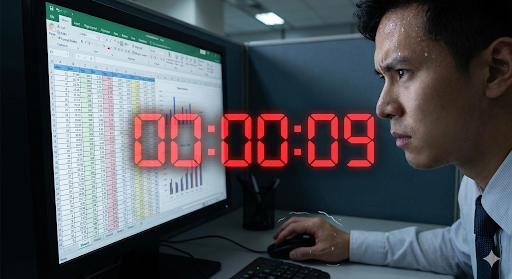
Let’s play a quick game. Open a new tab and load up your business’s homepage.

Now, look at it objectively. What is the very first thing it says to a stranger?

If it’s some variation of "We are an award-winning, multidisciplinary agency passionately crafting digital experiences since 2014," I have some bad news for you.

You haven’t built a business website. You’ve built a shrine to your own ego.

Don’t get me wrong, it probably looks beautiful. The fonts are trendy, the whitespace is luxurious, and that high-res photo of your team laughing while holding MacBooks is impeccable.

But here is the harsh truth that most web designers are too polite to tell you: Your customers do not care about you.

They care about themselves. They care about their problems. And they care about whether you can fix them before their boss yells at them.

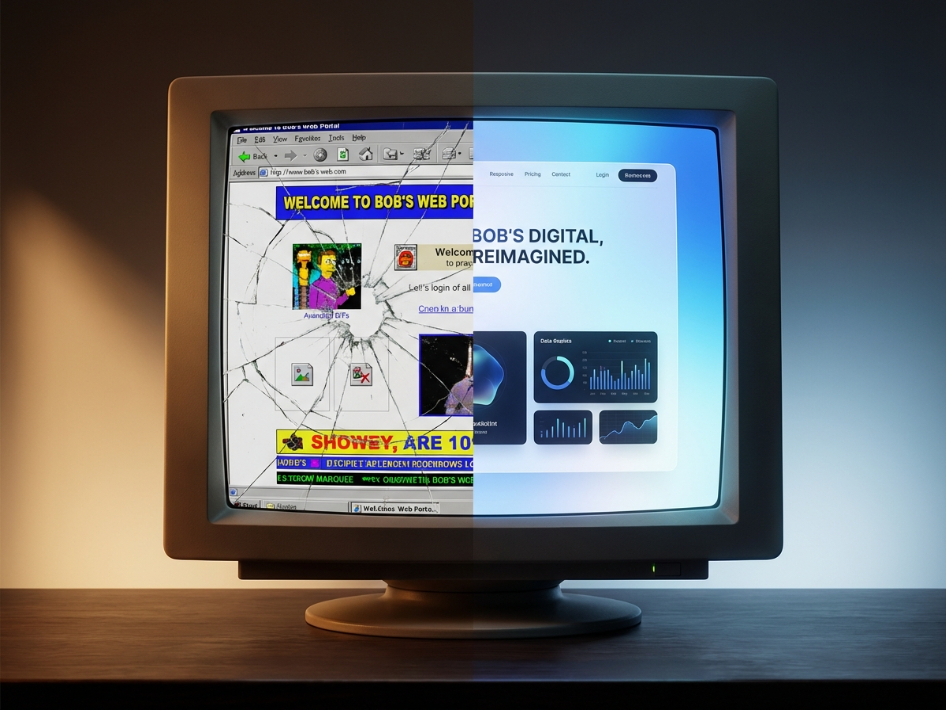
If your website is just a "portfolio"—a static collection of past glory—you are leaving money on the table every single day. It’s time to stop building digital monuments and start building a sales machine.

The "Look At Me" Trap

The portfolio mindset is easy to fall into. When you hire an agency or build a site yourself, the natural instinct is to show off. You want to prove you’re legitimate. You want to display your awards, your biggest clients, and your intricate process.

You treat your website like an art gallery meant to be admired from afar.

The problem is that visitors aren't art critics. They are busy, stressed-out people looking for a solution.

When a potential client lands on a "portfolio" site, they have to do all the mental heavy lifting. They have to look at your pretty pictures and figure out, "Okay, but how does this apply to my messy, unglamorous problem?"

Most won't bother. They’ll bounce back to Google and find a competitor whose site says, "Got this specific problem? Here is how we fix it in three steps."

Meet Your New 24/7 Employee

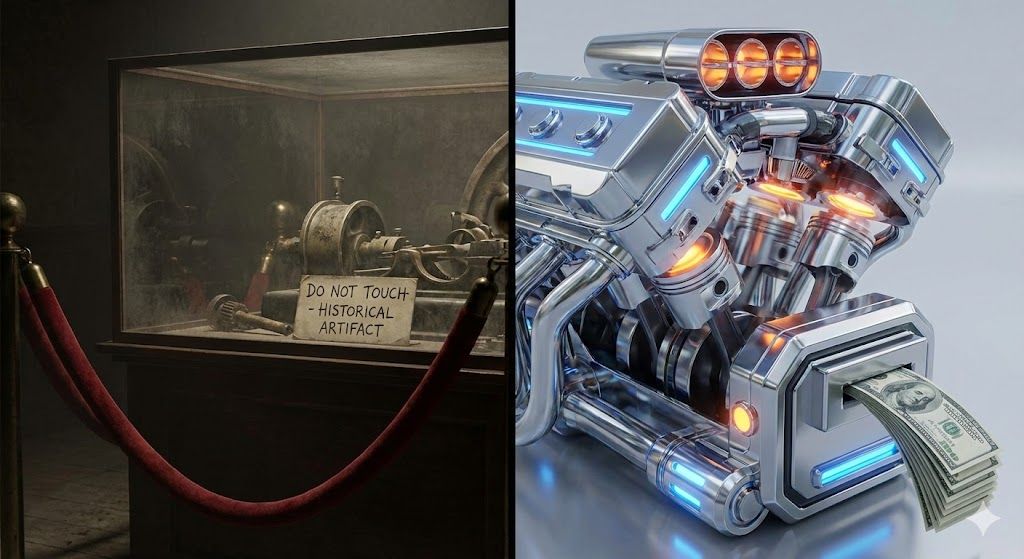
It’s time for a paradigm shift. Stop thinking of your website as a brochure. Start thinking of it as your best employee.

This employee never sleeps. It doesn't take coffee breaks. It works Christmas day. It can talk to 5,000 people simultaneously without breaking a sweat.

If you hired a human salesperson and they spent their entire first meeting with a prospect talking only about themselves, their awards, and how passionate they are—without ever asking the prospect what they need—you would fire them immediately.

Yet, that is exactly what your website is doing right now.

A "sales machine" website has a job description. Its job isn't to "build brand awareness" (whatever that means). Its job is to capture an email address, book a demo, or sell a product. If it’s not doing those things, it’s loafing on the company dime.

Pretty Doesn't Pay the Rent

Am I saying design doesn’t matter? Absolutely not. Bad design breeds distrust.

But there is a massive difference between "artistic design" and "functional design."

A portfolio prioritizes aesthetics over action. A sales machine prioritizes clarity over cleverness.

If your "Contact Us" button is a tiny, tasteful ghost button hidden in the footer because a big, ugly orange button ruined the aesthetic vibe, you have failed.

You need to be willing to sacrifice being "cool" for being clear. If a slightly uglier headline converts 20% better because it clearly states the value proposition, you run the ugly headline. You can buy plenty of cool art with the extra revenue it generates.

The Art of the "Ask"

The biggest difference between a portfolio and a sales machine is the Call to Action (CTA).

Portfolios are passive. They end a page with a vague hope that the user will be so impressed they’ll magically know to pick up the phone.

Sales machines are assertive. They guide the user by the hand.

Every single page on your site needs a primary goal. What do you want them to do next? Read a case study? Download a white paper? Schedule a consultation?

Don’t make them guess. Tell them. And for the love of all that is holy, stop using vague buttons like "Learn More." Use action-oriented language like "Get My Free Audit" or "See Pricing."

The Verdict

Look at your website again.

Is it a passive trophy case collecting digital dust? Or is it an active engine that drives your business forward?

If it’s the former, don't panic. But do realize that while you’re admiring the aesthetics, your competitors are busy closing the leads that should have been yours. Stop showing off, and start selling.

#Design#UX#Tech
H

Harsh

Founder

This author has not added a bio yet.

Visit Profile

Table of Contents

The "Look At Me" TrapMeet Your New 24/7 EmployeePretty Doesn't Pay the RentThe Art of the "Ask"The Verdict