
Logo
Services
Pricing
Use Cases
Company
Contact Sales
Logo

Ready to transform
your business?

Schedule a call with us to start your brand's trip to the stars... or maybe just to talk shop.

Contact Sales
Logo
Logo

The Walking Jumbo is dedicated to propelling businesses into the future with cutting-edge AI solutions, innovative web development, and captivating digital experiences.

Company

  • Home
  • About
  • Work
  • Blog
  • Careers
  • Contact Sales
  • Free Website Audit

Services

  • Webflow Development
  • Wordpress Development
  • Web Design
  • E-commerce Solutions
  • Custom Software Development
  • AI Integration & Automation
  • Accessibility Testing & Compliance
  • SEO Optimization
  • Social Media Management
  • Website Maintenance
  • Copywriting Services
  • Migration & Integration

Resources

  • B2B
  • E-Commerce
  • SaaS
  • Healthcare
  • Education
  • Finance & FinTech
  • Real Estate
  • Hospitality
  • Privacy Policy
  • Terms of Service
  • Sitemap

© 2026 The Walking Jumbo. All rights reserved.

Back to Blog
Business

Why Your "Master Spreadsheet" Is a Ticking Time Bomb

We all have that one Google Sheet. The one that runs the entire company. The one that, if accidentally deleted, would force you to close your doors. Here is why relying on spreadsheets is the most dangerous addiction in business—and how to sober up with custom software.

H
Harsh
December 20, 2025
5 min
Why Your "Master Spreadsheet" Is a Ticking Time Bomb

Share

Every growing business has a dirty little secret.

On the surface, you look professional. You have a sleek website, a nice logo, and happy customers.

But behind the scenes? Your entire operation is being held together by duct tape, prayers, and "The Master Spreadsheet."

You know the one I’m talking about. It’s that monstrous Excel file with 45 tabs, color-coded cells that look like a bag of Skittles exploded, and formulas so complex that only Steve from Accounting understands them.

If Steve gets hit by a bus (or just decides to quit), your business is toast.

We see this constantly. Companies scaling to $1M or $5M in revenue, yet they are still managing inventory, client data, and project tracking on a piece of software designed for making grocery lists.

Here is the tough love: Spreadsheets are not software. And treating them like software is a recipe for disaster.

The "Version Control" Nightmare

"Hey, who has the latest version of the Client List?"

"I think Sarah emailed it last Tuesday."

"Wait, I’m looking at 'Client_List_FINAL_v3.xlsx', is that the right one?"

If this conversation sounds familiar, you are bleeding money.

Spreadsheets are static. They live on someone’s desktop or get buried in email chains. The moment you email a spreadsheet to a colleague, you have created two versions of the truth. Now you have data fragmentation.

Custom software (like a web-based dashboard or ERP) provides a Single Source of Truth. Everyone logs into the same system. Everyone sees the same live data. There is no "v3_FINAL_REAL." There is just the data.

Fragility: One Wrong Click

Have you ever seen a grown man cry because he accidentally sorted a column without expanding the selection, scrambling 5,000 rows of customer data? I have. It’s not pretty.

Spreadsheets are incredibly fragile. A stray keystroke can break a formula. A copy-paste error can corrupt your financials.

Custom software has Guardrails.

• It validates data (so you can’t type "Banana" into a "Phone Number" field).
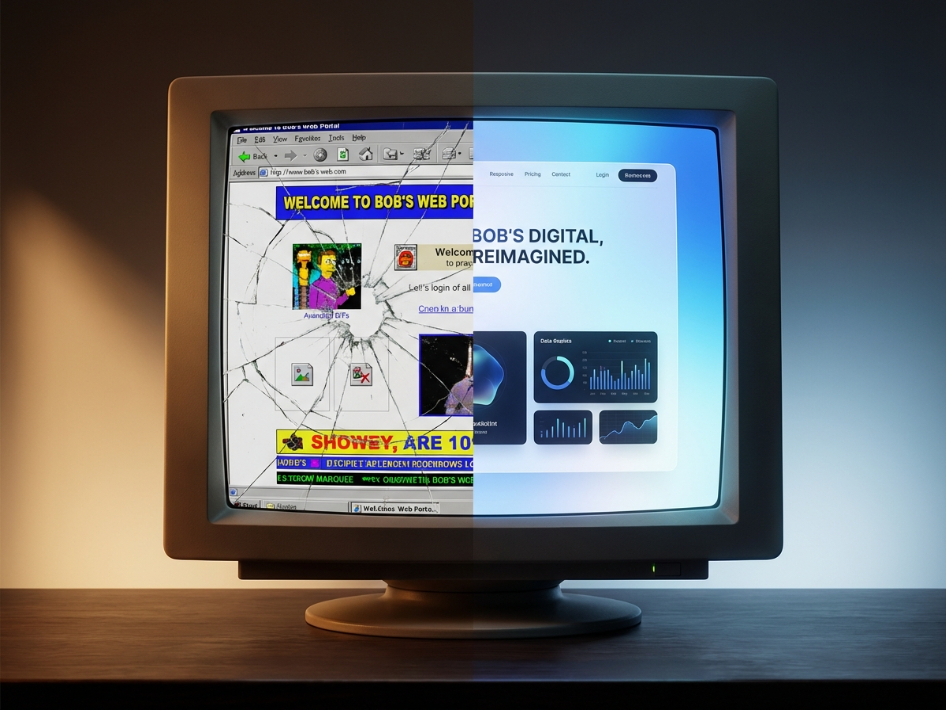
• It creates backups automatically.

• It has user permissions (so the intern can’t accidentally delete your Q3 revenue projections).

Stop trusting your livelihood to a grid of fragile cells.

The Automation Gap

Spreadsheets are passive. They sit there waiting for you to type things into them.

Custom software is active. It works for you.

Let’s say you run a logistics company.

• The Spreadsheet Way: You look at the "Orders" tab, copy the address, paste it into a shipping label maker, print it, then go back to the sheet and type "Shipped."

• The Custom Software Way: You click one button. The system generates the label, emails the tracking number to the client, updates the inventory count, and sends an invoice to QuickBooks.

One method takes 10 minutes. The other takes 10 milliseconds. Over a year, that is hundreds of hours of human life saved.

"But Custom Software is Expensive!"

This is the number one objection. "I don't have $20k or $50k to build a custom ERP!"

Okay, fair. But what is the cost of not building it?

• What is the cost of the 15 hours a week your team spends manually data-entering?

• What is the cost of the client you lost because their order slipped through the cracks?

• What is the cost of making a strategic decision based on bad data?

Custom software is an Asset. It increases the valuation of your company. When you go to sell your business, a buyer will pay a premium for a company with automated, proprietary systems. They will discount a company that runs on a chaotic mess of Excel sheets.

Breaking the Addiction

You don't have to replace everything overnight. You don't need to build a spaceship.

Start small. Look for the biggest bottleneck in your business—the process that makes everyone groan. Maybe it’s inventory management. Maybe it’s client onboarding.

Turn that specific headache into a simple web app.

Once you feel the power of clicking a button and watching a machine do the work, you’ll never want to look at a spreadsheet row again.

The Master Spreadsheet has served you well. But it’s time to retire it before it retires you.


#Design#UX#Tech
H

Harsh

Founder

This author has not added a bio yet.

Visit Profile

Table of Contents